Manufacturing across Europe is becoming increasingly digital. Production lines are connected, data flows in real time, and artificial intelligence is steadily entering industrial environments. Yet many essential tasks remain deeply human.
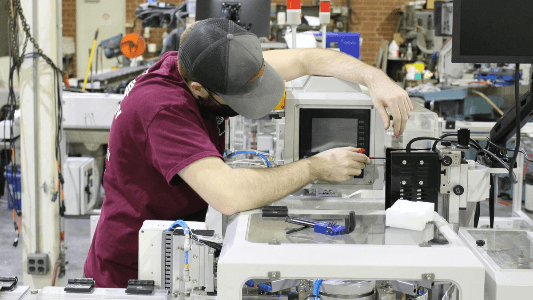
In high-precision sectors such as medical devices, electronics and wearables, assembly work demands sustained concentration, fine motor control and physical endurance. Workers handle sensitive components, follow strict procedures and often operate in protective clothing that limits conventional interaction with screens or devices. Quality requirements are high, and consistency matters.
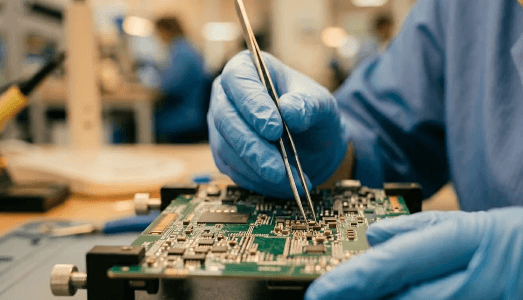
As digital systems become more present on the shop floor, an important question emerges: how can technology support people without distracting them from the task at hand?
Industry 5.0 has brought renewed attention to this topic, emphasising that innovation should strengthen human capabilities rather than sideline them. In practical terms, this means designing systems that fit naturally into existing workflows, respect organisational realities and acknowledge that trust is central to adoption.
One promising direction is conversational interaction. Voice-based assistants, combined with carefully designed perception capabilities, can enable touch-free access to guidance and information. When implemented on local edge devices, such systems can operate with low latency and clear data boundaries, aligning with European data protection expectations. The technical challenge is only one part of the equation; user experience, clarity of interaction and perceived usefulness are equally decisive.
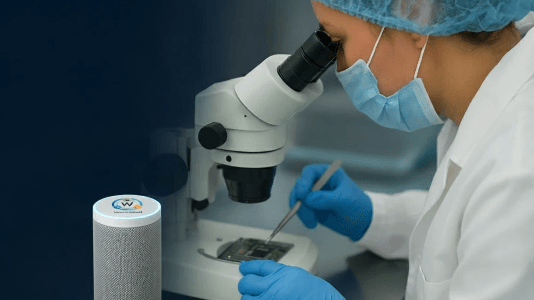
Within the European WASABI initiative, different partners are exploring how modular conversational AI components can be packaged and shared in ways that allow adaptation across sectors. The underlying idea is interoperability and reuse, so that digital building blocks can evolve sustainably within the European ecosystem.

Our WorkWell experiment sits within this broader context. We are examining how a conversational assistant can accompany high-precision assembly work as a supportive layer, offering hands-free interaction and context-aware guidance while maintaining a privacy-first architecture. The focus is not only on technical feasibility, but also on how such systems are perceived in everyday working environments.
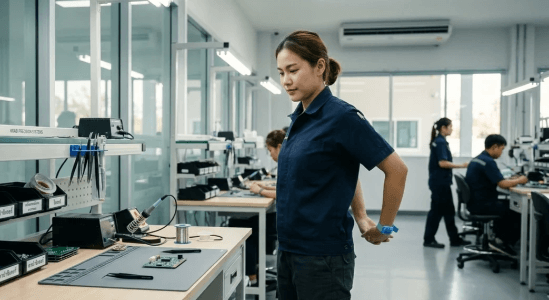
Digital transformation in manufacturing is often discussed in strategic terms. On the shop floor, however, its value is experienced in small, practical moments: when information is accessible without breaking concentration, when interaction feels natural, and when technology remains quietly reliable in the background.
Keeping that perspective in mind helps ensure that innovation remains closely connected to the people it is meant to support.