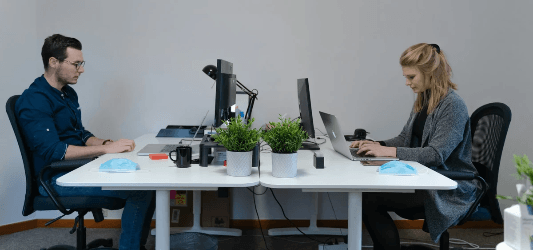
When we get absorbed in our work, it is easy to lose track of time. A few emails, a meeting or a task that requires concentration can quickly turn into several hours spent sitting at a desk. This is a familiar part of many working days, but it also means that we sometimes move less than we might realise.
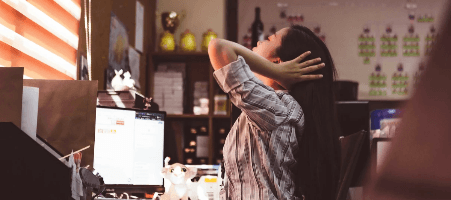
Prolonged sitting has been associated with several health risks, including cardiovascular disease and metabolic conditions. The Mayo Clinic highlights the importance of reducing sedentary time and incorporating more movement into everyday routines. Alongside these broader health considerations, spending long periods in the same position can also contribute to stiffness and discomfort, particularly around the neck, shoulders and back.
Taking a short break, standing up, changing position or doing a few simple stretches are easy ways to introduce more movement into the day. Yet remembering to do so is not always easy, especially when concentrating on a task. A gentle reminder at the right moment can make a difference in bringing these small habits into everyday routines.
This is where conversational technology offers an interesting opportunity. Voice-based assistants can provide spoken reminders and guide users through simple activities without requiring them to interrupt their workflow to interact with a screen. From a short neck or shoulder exercise to a breathing routine or a prompt to get up and move, these interactions can offer accessible ways to introduce more variation into the working day.
Within the European WASABI project, we have been exploring how conversational AI can support workplace wellbeing, particularly in environments where touch-free interaction and unobtrusive assistance are valuable. As part of this work, we developed the WorkWell Orchestration Skill, an open-source skill for OpenVoiceOS (OVOS). It provides a local voice interaction layer for wellbeing activities. The skill includes spoken instructions, exercise steps and timings that can be adapted without changing the underlying code. It also provides extension points for customising spoken messages and adding further timed actions, making it possible to adapt the functionality to different environments and requirements.
We are now making the WorkWell Orchestration Skill openly available so that other OVOS users and developers can reuse, customise and extend it independently. The intention is to share a practical building block that others can experiment with and build upon, rather than a solution limited to one particular workplace application.
Explore the open-source release: WorkWell Orchestration Skill - GitHub
Sometimes, supporting wellbeing at work starts with small things: taking a moment to stretch, changing position or remembering to step away from the desk. We hope that making these tools openly available will encourage further ideas and experimentation around how conversational technology can support everyday workplace routines.